English

This guide explains how a Talkdesk Chatbot can enhance contact-center deflection, routing, and customer self-service. It objectively reviews what chatbot-driven workflows do, where they fit in omnichannel CX, and what capabilities to evaluate—such as integrations, escalation rules, and compliance—so teams can implement responsibly with measurable outcomes.
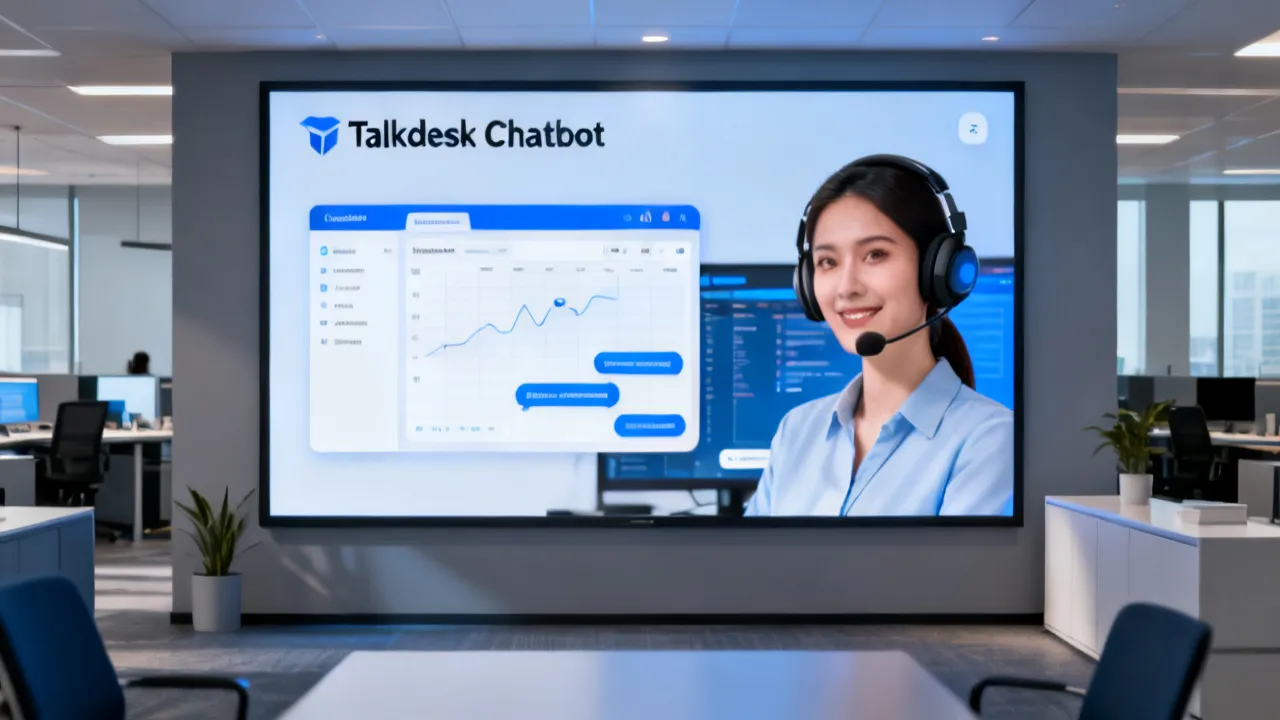
A Talkdesk Chatbot helps contact centers reduce routine workload, improve response consistency, and route complex requests to the right human teams—provided the design is grounded in clear intents, reliable integrations, and well-defined escalation rules. In practice, the chatbot becomes a front door for customer conversations, capturing context early and handing off accurately when automation can’t fully resolve an issue.
This article focuses on decision-relevant factors—capability fit, implementation approach, and operational requirements—rather than hype. If you’re considering a deployment of a Talkdesk Chatbot as part of your customer service strategy, you’ll find practical guidance on how to assess readiness, design conversation flows, and manage quality over time.
Note: You provided keywords that appear with blank placeholders (e.g., repeated quotes). Since no additional named products, cities, prices, or supplier details were supplied in the prompt, the article concentrates on the core topic: Talkdesk Chatbot.
Contact centers increasingly operate in an omnichannel environment where customers expect fast answers across web chat, messaging, and sometimes voice-adjacent workflows. It’s not just that customers want speed; they want continuity. They want to start a conversation in one channel and keep momentum even if they need to switch channels later. A well-implemented chatbot can reduce “time-to-first-help,” but it should also reduce “time-to-understanding” by asking structured questions in a clear, guided way.
In many organizations, customer service is a combination of repeating patterns and exceptions. Repeat patterns include common questions like hours of operation, order status, password resets, return eligibility, and basic account troubleshooting. Exceptions include issues like billing disputes, suspected fraud, complex technical outages, and cases where policy interpretation is required. A chatbot matters because it can handle a large portion of the repeat pattern work consistently, while providing an escalation path when the case becomes an exception.
From an industry perspective, the strategic value of a chatbot is not simply deflection. It’s workflow leverage: capturing structured information, validating intent, and passing context to downstream systems (CRM, ticketing, knowledge base, order management, and identity services). That context is what enables better routing, faster resolution, and fewer repeat contacts. In other words, the chatbot is valuable when it behaves like an operational component, not when it merely provides text responses.
When done well, chatbots also improve the agent experience. Agents get fewer “cold-start” tickets because the bot can collect order numbers, email addresses, product identifiers, and the customer’s description of the issue. The handoff becomes more like a transfer of a structured case record than a reset of the conversation.
However, the same capability can become a liability if it’s poorly designed. Customers can lose trust when bots loop, ask for irrelevant information, or provide answers that don’t match current policy. So the real question isn’t “can a chatbot answer questions?” The real question is: can it operate safely within your service model while maintaining conversational quality and measurable outcomes?
Talkdesk-style conversational support typically aligns with contact-center orchestration rather than acting as a standalone bot. The practical implication is that the chatbot should be designed to:
In a mature contact-center environment, the chatbot is not separate from the rest of the system. It is one step in a lifecycle: discovery → identification → action or escalation → resolution → analytics and continuous improvement. A chatbot that only “talks” but can’t “do” will fail to deliver the operational leverage leaders expect.
It’s also worth noting that Talkdesk deployments often sit inside a broader strategy for customer service automation. Some organizations combine chatbot flows with agent assist, knowledge management, case management, and omnichannel routing. That means your chatbot design should consider how it will interact with agent workflows and back-office processes, including who owns what and where the customer’s case record should live.
Finally, Talkdesk implementations are often judged by how well they reduce operational friction. That includes how quickly a case reaches the correct queue, how reliably the bot extracts key data, and how accurately escalation summarization helps agents understand what’s already been attempted.
To choose and implement a Talkdesk Chatbot responsibly, focus on concrete capability areas. The very common failures occur not because teams lack messaging talent, but because systems are missing the operational hooks required for safe automation. In other words, the design might be correct on paper, but the implementation can fail when it can’t access the right data or when escalation doesn’t behave consistently.
A good evaluation starts by asking “what must happen next?” for each intent. If you can’t describe what happens next in a way that involves real systems and real ownership, the automation will likely stall at the pilot stage.
Start with the highest-volume, lowest-risk requests. Then expand based on measurable success. Good intent design typically includes:
A mature approach treats conversation design as part of operations, not only “bot content.” That means you should define: what the bot will ask, what it will validate, what it will do, and what it will escalate. If your intent coverage doesn’t map to these operational outcomes, you’ll get either low containment with high frustration, or high containment with poor resolution quality.
To build intent coverage responsibly, consider the distribution of your customer contact reasons. A common mistake is to choose intents based only on intuitive business priority rather than actual contact volume and resolution impact. Another mistake is to start with too many intents at once. Early scope should be narrow enough to support deep QA and reliable escalation.
It also helps to design for real customer language. Not every customer will phrase requests in the same terms as your internal taxonomy. You want to capture variations: synonyms, misspellings, and colloquial phrases. Even without going into advanced model training, you can improve intent reliability through good prompt design and careful test-case selection that reflects real ticket language.
Finally, intent design needs to account for multi-intent situations. Customers often ask compound questions: “I want to return this item, but I also need to change my address for the replacement.” Your chatbot must either (a) handle these as sequential steps, or (b) split them and escalate in a controlled way while preserving context.
For very service domains, answers must come from credible sources. Whether you use an internal knowledge base, curated FAQs, or product documentation, the chatbot should retrieve and cite (internally) the information it uses for responses. The key is not whether you can generate a reply; it’s whether you can guarantee that the reply reflects current policy.
Operationally, the top systems reduce the risk of outdated guidance by connecting chatbot answer logic to your knowledge lifecycle. Ideally, knowledge changes should propagate in a predictable way. That includes versioning, review approvals, and rollback procedures. A chatbot without governance around knowledge updates can create consistent misinformation at scale.
Some teams treat chatbot knowledge as “content.” But in reality, chatbot knowledge behaves like a decision system. When a policy changes—return window, eligibility rules, refund timelines, or fees—your chatbot must update quickly and accurately. This suggests establishing a knowledge governance workflow with clear roles:
You also want to design knowledge retrieval for the user experience. For example, a chatbot can respond with a short answer plus a link or reference to deeper content, but it should do so consistently across intents. When there is no authoritative answer, the bot should not guess. It should escalate to a human or to a verified workflow (like a return portal).
Another practical point: knowledge articles need to be written in a “bot-friendly” structure. If your internal docs are too technical or too long, the bot may extract irrelevant parts. If your answers require multiple conditions (e.g., “returns are accepted only if…”), the bot should be able to ask the minimum needed questions to determine which branch is correct.
A chatbot becomes truly valuable when it can complete tasks and not only provide text responses. Depending on your environment, you may need integrations such as:
Without these connections, a chatbot often becomes a “question dispenser,” which can frustrate customers and increase agent work later. Customers may ask for an order status, and the bot replies generically (“Please check your email”) instead of doing the lookup. This is a common gap between early pilots and production expectations.
It’s also important to consider integration reliability and performance. If the chatbot depends on an external API and that API is slow or unstable, the user experience suffers. A well-designed bot should handle integration delays with appropriate messaging (“I’m checking that now”) and fall back safely when systems fail.
Additionally, you need to map integration outcomes back into conversation logic. For example:
From a security standpoint, integration design should follow least-privilege principles. The chatbot should only be granted access to the data and actions needed to fulfill the approved intents. If your bot has overly broad permissions, a bug or misrouting could expose sensitive data.
Escalation is where customer trust is won or lost. Your chatbot should:
From an expert operations standpoint, the highest ROI escalation policies are those that combine confidence scoring with explicit business rules—especially for billing, returns, and account changes.
To design escalation well, you need to define categories of “handoff” rather than using a single generic approach. For example:
Each handoff category should carry structured metadata to help agents prioritize and resolve faster. The handoff summary should include:
Finally, ensure escalation doesn’t feel like a reset. A high-quality chatbot handoff is one where the agent can immediately see the customer’s context and the conversation path. If agents still need to re-collect basic details, your automation will reduce containment but increase total labor—so it will fail the business case.
Teams often track a single “containment” metric, but that can obscure quality. A more reliable measurement framework includes:
For benchmarking approaches, it’s useful to consult industry guidance from sources such as the International Telecommunication Union (ITU) and the International Organization for Standardization (ISO) frameworks relevant to customer service quality. For customer experience analytics, many organizations also rely on top-practice research from analyst groups and official measurement methodologies.
It’s also wise to avoid misinterpreting containment. Containment can rise when the bot stops escalating, but resolution quality may fall. A “successful” deflection is one where the customer’s underlying issue is resolved. Therefore, measurement must include outcome validation, not just interaction counts.
Consider building a balanced scorecard that includes:
Additionally, ensure your measurement captures the right time horizon. Some issues appear resolved in the chat but require follow-up (e.g., shipment delays, partial refunds, identity verification delays). Therefore, recontact and resolution metrics should be tracked over appropriate windows.
Even when automation is limited to FAQs and status checks, governance still matters. A Talkdesk Chatbot should be managed like a customer-facing system with controlled updates. In regulated or privacy-sensitive environments, the chatbot must also comply with data handling standards, audit requirements, and security policies.
Governance is not a one-time legal exercise. It should be an ongoing operating practice. When new products launch, policies change, or systems update, the chatbot’s logic must remain aligned. A bot program without governance tends to accumulate drift: outdated prompts, mismatched intent logic, and inconsistent escalation behaviors.
Chatbots typically process personal data (names, order numbers, contact information). Your program should define:
If you operate under GDPR-like regimes (common across many markets), ensure you have a clear data processing basis and documented retention policy. Practically, this means documenting:
Also, consider user transparency. Customers should understand what the chatbot is doing with their data, what it can and cannot do, and what happens when an agent takes over. If a customer submits sensitive information, the system should handle it carefully and, when appropriate, avoid retaining more than necessary.
Many customers rely on readable, structured interactions. Your chatbot should support:
Accessibility is more than compliance—it’s quality. Customers who struggle with reading, language barriers, or disability may need extra clarity. A chatbot should use plain language, avoid jargon where possible, and provide structured options that are easy to navigate.
It also helps to consider localization. If you serve multiple languages, you may need separate intent models or carefully governed translation layers. Even a simple “policy” response can become wrong if translation introduces ambiguity. Therefore, you may want to adopt a process for validating policy text in each supported language.
Especially during rollout, you’ll want a process for capturing “misses” and routing them to subject-matter experts—so the bot improves without silently expanding into risky territory.
Human-in-the-loop design typically includes:
One of the biggest operational risks is “silent degradation.” Over time, policy changes, systems update, and your knowledge base drifts. If you only monitor outcomes in broad terms, you might miss a specific class of failures that increases customer effort or increases recontacts. A robust human-in-the-loop process catches drift early.
During rollout, also consider how agents will perceive automation. Some agents may receive improved case context, but they may also see cases that don’t fit the expected structure. Therefore, collaborate with agents and supervisors to define what a “good handoff” looks like from their perspective. Their feedback should inform how you format handoff summaries and how you categorize escalation reasons.
Below is a supplement that compares typical implementation approaches for a Talkdesk Chatbot. (No external links are included in the table, per your requirement.)
| Category | Approach | Common Source Inputs | Step-by-Step Guide | Conditions / Requirements |
|---|---|---|---|---|
| Use-case scope | Start with “high-volume, low-risk” tasks | Top contact reason reports; knowledge base articles; product policy docs | 1) Identify top intents by contact volume 2) Classify by risk 3) Build scripts for 3–5 initial intents 4) Define escalation triggers | Clear policies for what the bot can and cannot do; knowledge coverage sufficient for each intent |
| Conversation design | Intent-led flows with controlled fallback | FAQ taxonomies; customer support playbooks; historical tickets | 1) Define intent + required entities 2) Draft prompts and confirmations 3) Add safe fallback 4) Create “handoff summary” templates | Consistent naming conventions for intents; test cases representing real customer phrasing |
| Integration model | Task completion via system connectors | CRM/ticketing APIs; order status services; identity verification workflows | 1) Map each intent to a system action 2) Validate data fields 3) Implement API error handling 4) Log outcomes for analytics | Integration access approved; SLAs defined for downstream systems; retry and failure policies |
| Knowledge retrieval | Curated answers from governed knowledge base | Approved documentation; internal SOPs; change logs | 1) Select authoritative sources 2) Create answer templates 3) Establish review cadence 4) Set “no answer” escalation rules | Governance owner assigned; update workflow for new product/policy changes |
| Monitoring & quality | QA loops with measurable outcomes | Transcript reviews; agent feedback; analytics dashboards | 1) Define quality rubric 2) Sample conversations 3) Track resolution outcomes 4) Iterate monthly | Dedicated QA capacity; access to escalation outcomes and reopened ticket data |
| Governance | Change control with approvals | Policy change records; release notes | 1) Create a change request template 2) Require SME approval 3) Schedule deployments 4) Roll back if error thresholds are exceeded | Rollback plan; documented ownership; versioning for bot logic and prompts |
From an expert implementation standpoint, the very reliable rollouts follow a structured sequence. The order matters: you should define outcomes and safety constraints before you scale conversational coverage.
At this stage, it helps to create a “bot service catalog” that lists each intent, its operational outcome, the system actions it triggers, and the escalation behavior. This becomes the blueprint for later QA and measurement.
As you design, you should also plan for conversation edge cases. For example: incomplete identifiers, customer frustration, multiple attempts with conflicting details, and customers who ask about topics outside your scope. Decide early whether you will redirect, escalate, or provide limited guidance.
Also, consider how your chatbot handles confirmations. Confirmation should prevent errors. For instance, if the bot is about to check an order using a provided email, confirm the email or verify the order identifier. This is particularly important for account-related intents.
In practice, integration testing often reveals conversational gaps. For example, the API might return multiple results or no results, requiring conversation logic to ask clarifying questions. Plan for data ambiguity and ensure the bot’s responses match those operational realities.
During the pilot, involve customer support leaders and frontline agents. Ask them to describe where handoffs feel incomplete, what information they wish the bot included, and which intents generate repeated clarifying questions. Those insights can drastically improve handoff quality.
Even strong implementations can underperform if the fundamentals are neglected. Common pitfalls include:
Additionally, there are “design debt” issues. For example, if your intent taxonomy is too broad, your bot will struggle to select the correct path. If your entity extraction is inconsistent, your escalation will produce incomplete summaries. If your fallback is too generic, customers will feel dismissed.
A Talkdesk Chatbot program is top treated as an ongoing service, not a one-time IT project. Production work includes monitoring integration health, updating content, tuning escalation logic, and revisiting conversation flows as customer behavior changes.
Another common issue is failure to align chatbot behavior with agent training. Agents may assume that bot handoffs include certain verified information. If the bot sometimes provides unverified fields, agents might waste time correcting them. Therefore, ensure that bot outputs are either verified or clearly marked as user-provided and unverified.
A Talkdesk Chatbot is a conversational customer support automation that engages users through chat interfaces and uses predefined intents, knowledge sources, and integrations to answer questions, gather details, and escalate to human agents when needed. The defining feature in very contact-center contexts is its alignment with routing and operational workflows.
In other words, it’s not just an automated Q&A experience. It is an operational component that participates in case handling: it can gather data, validate or verify information through integrated systems, take certain actions (like creating tickets or checking order status), and then escalate with meaningful context.
Prioritize requests that are high volume, low to medium risk, and backed by authoritative documentation. Then validate with risk categories and confirm that the chatbot can collect required data or route users to human support when verification is needed.
A practical method is to create a shortlist from top contact reason reports, then score each candidate intent on:
Then build the first release to cover the highest scoring intents with a tight loop of QA and measurement.
It can, but only if escalation is accurate and task completion integrations work as expected. The top programs reduce repetitive contacts and improve first-contact resolution rather than simply “closing chats” prematurely.
Responsible workload reduction also means the bot should not create additional work for agents by producing incomplete context or incorrect categorizations. If the bot deflects but increases reopened tickets, it shifts effort rather than removing it.
Therefore, the success criteria should include agent-impact metrics such as improved ticket quality, fewer follow-up clarifications, and stable or improved resolution rates.
At minimum: the reason for contact, a concise summary of the customer’s goal, key extracted fields (when appropriate), the steps already attempted by the bot, and the recommended next action. This avoids repeating questions and accelerates resolution.
Good handoff content is structured and consistent. A practical handoff format might include: intent label, customer-provided details, verified details, policy checks performed, system actions taken, and a next-step instruction such as “agent should confirm eligibility and process refund exception.”
Additionally, include “negative results” (what the bot checked and couldn’t find). For example: “Order status lookup returned no order for provided number/email; ask customer for updated identifiers.” That single line can save multiple minutes.
Use outcome-based metrics such as end-to-end resolution, recontact rate, escalation quality (e.g., reopened cases), and customer effort indicators (turn count, form completion rate, drop-off points). Combine quantitative tracking with transcript QA.
It helps to define “resolution” for each intent. For an order status intent, resolution might mean “customer receives correct shipping status and next expected delivery date.” For a password reset intent, resolution might mean “customer successfully resets and regains access.” For a billing issue, resolution might mean “case created and routed with correct reason codes; customer sees next steps.” Even if the bot can’t complete the resolution itself, you can measure whether the escalation path was correct and effective.
Assign an owner for knowledge sources, define review frequency, and require approvals for policy changes. Ensure bot responses do not continue using outdated guidance after policy updates.
Governance in practice includes:
Without this, chatbot performance will degrade quietly as customer policies evolve.
It depends on verification and policy constraints. Typically, sensitive flows require stronger authentication, tighter scope, and higher thresholds for escalation to avoid incorrect outcomes. Start narrow and expand only when processes and controls are proven.
For billing disputes, a chatbot can often handle the early stage safely (collect details, confirm customer identity, gather invoice identifiers, and route to the right team). But it should avoid making irreversible decisions unless you have a tightly governed workflow and auditing.
You should also consider how to handle the customer’s narrative. Free-text complaints can include sensitive data. You may need additional privacy controls and content moderation rules.
Common high-impact integrations include CRM/contact history access, ticketing workflow creation, order/account status retrieval, and any authentication system required for sensitive actions. The specific set depends on your service catalog.
Integrations are not only about “connections.” They also require data mapping and error handling. You need to know how identifiers are formatted, what happens if multiple records are found, how to interpret API errors, and how to log integration outcomes for measurement.
Timelines vary based on scope, integration complexity, knowledge readiness, and QA requirements. A well-run pilot focusing on a limited set of intents is typically faster and yields clearer metrics for expansion.
A realistic implementation timeline often includes buffer for knowledge governance and escalation tuning. Teams sometimes underestimate how long it takes to align stakeholders on policies and to build a QA rubric that can reliably judge correctness and customer experience.
Establish a QA rubric, conduct transcript sampling, review escalation correctness, validate answer accuracy against source documents, and run regular regression tests after knowledge or workflow changes.
Good QA goes beyond “did the bot answer correctly.” It also evaluates:
Also, QA should include monitoring integration failures and measuring how often the bot escalates due to system errors versus genuine intent uncertainty.
A Talkdesk Chatbot can materially improve customer service performance when it is treated as part of your contact-center operating model. The very successful deployments start with well-scoped intents, connect to the systems that enable real task completion, and maintain escalation and governance discipline. Measure outcomes holistically, invest in transcript QA, and iterate as your knowledge and workflows mature.
If you plan your rollout this way, the chatbot becomes more than a conversational interface—it becomes a reliable pathway that respects customers’ time and equips agents with the context they need. And when the bot can’t solve the request safely, it hands off with clarity, turning what could have been a frustrating experience into a smooth transfer to human expertise.
How to Thrive on Dating Platforms for Asian Singles

Unveiling Atranet Innovation

Discovering the Essence of Done Ti

Prepaid Phones Without Monthly Fees

Navigating SEO for Business Success

Understanding Done Ti: An In-Depth Analysis

Understanding Rs Sul Telecom's Role in Internet Provision

Navigating Affordable Dental Implant Options

Exploring Internet Service Options

Talkdesk Chatbot Guide for Contact Center Efficiency
This guide explains how a Talkdesk Chatbot can streamline customer interactions, reduce repetitive workload, and improve routing accuracy through conversational workflows. It provides an objective overview of chatbot capabilities, typical integration considerations, and operational top practices, including governance, quality assurance, and metrics selection for contact centers evaluating AI-driven customer service.

A Practical Guide to Talkdesk Chatbot Adoption
This guide explains how to plan, evaluate, and implement a Talkdesk Chatbot for efficient customer service. It reviews the core concepts behind AI-driven conversational support, the operational choices contact centers must make (routing, escalation, and compliance), and how to align the chatbot with existing support workflows. It also includes expert considerations, requirements, and FAQs to support sound decision-making.
Talkdesk Chatbot Implementation Guide for Contact Centers
This guide explains how a Talkdesk Chatbot can enhance contact-center deflection, routing, and customer self-service. It objectively reviews what chatbot-driven workflows do, where they fit in omnichannel CX, and what capabilities to evaluate—such as integrations, escalation rules, and compliance—so teams can implement responsibly with measurable outcomes.
How a Talkdesk Chatbot Improves Contact Center Efficiency
This guide explains how a Talkdesk Chatbot supports faster, more consistent customer service through intelligent conversation flows and workflow automation. Objectively, “Talkdesk Chatbot” refers to an AI-assisted customer support channel integrated with contact-center systems. We review core capabilities, practical implementation choices, and decision conditions so teams can evaluate fit for their support operations.

How to Evaluate a Talkdesk Chatbot for Contact Centers
This guide explains how to assess a Talkdesk Chatbot for real-world customer service outcomes. It outlines objective background on conversational AI in contact centers, how bot interactions integrate with routing, knowledge, and compliance workflows, and what to verify before rollout. You’ll also find practical evaluation steps, requirements, and FAQs to support decision-making.

A Practical Guide to Talkdesk Chatbot Deployment
This guide explains how a Talkdesk Chatbot supports customer service operations, from use-case selection to secure deployment and performance governance. It provides an objective background on conversational AI, contact-center automation, and why bot-to-agent workflows matter for compliant, consistent service outcomes.